


Sustainable Investments: What is Conscious Fintechs? Facebook
Every card payment supports a climate protection project, deposits flow into sustainably operating companies as credit – and the account fees equalize emissions: With these promises the Hamburg-based financial startup Tomorrow wants to stand out from the crowd of current account providers. “Banking shouldn’t cost the world” is the credo, it is meant literally.
The idea is not revolutionary new. Several sustainability banks are already active in Germany with a similar claim. The GLS cooperative bank, founded in 1974 with more than 242,000 customers, is considered the market leader. Tomorrow positions itself as a modern climber who finally wants to “get the topic out of its niche”, as managing director Jakob Berndt says.
Regulatory coercion and social pressure
“More and more startups are bringing together the topics of digitization and sustainability,” says Markus Duscha, managing director of the Fair Finance Institute he founded. You benefit from two trends of recent years: “On the one hand, the regulatory requirements in the direction of sustainability are increasing, and on the other hand there is pressure from society,” says fintech expert Duscha.
As a direct consequence of the financial crisis in 2008, sustainability banks experienced an influx. Today, the new awareness of climate change is fueling business. With their digital products, the startups primarily address young people who have brought the topic to the streets under the umbrella of the “Fridays for Future” movement. There is also a tailwind from politics. For example, the federal government has set up a “Sustainable Finance” advisory board, which is supposed to develop recommendations in order to develop Germany into a leading location for sustainable finance.

Easy and safe investment: invest up to 12 months for free with growney
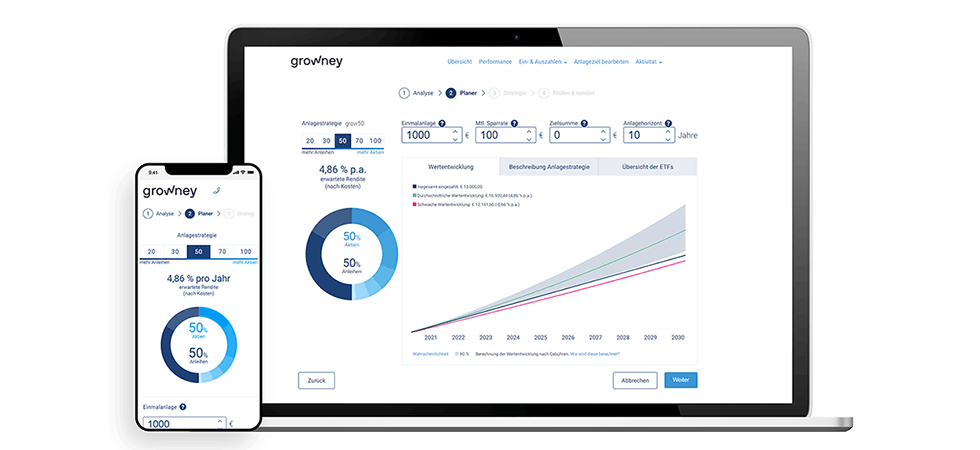
With the award-winning Robo-Advisor from growney, you can invest in affordable ETF savings plans without stress. Quite simply online and without clutter: set goals, open a depot and lean back.
It is not easy for anyone who wants to invest money. The interest on fixed deposits is in the basement, the roller coaster of the share prices is just stressful. And the appointment with the financial advisor in the branch bank? Annoying and in the end pushing you into things that you don’t even need. Isn’t there an investment that will bring you a good return in the long term and where you don’t have to worry about anything? Easy to use online and without hidden costs?
Yes, there are. Test winner growney makes digital investments very easy and lets your money grow – with ETF savings plans. You can start now and benefit from all services free of charge for up to twelve months.
Set goals, open a portfolio and lean back
growney invests in market-mapping ETFs from 45 countries worldwide with an optimal risk-return ratio for every type of investor. The scientifically sound passive investment concept performs better on average in the long term than active fund management. An automatic rebalancing of the depot and the tax optimization bring out the best for you. In normal market phases, after deducting all costs, your growney account achieves an average return of up to 7.65 percent pa *
Be it asset accumulation, retirement planning or home ownership: the award-winning robo-advisor growney will work out the best investment strategy for you. You can answer the questions conveniently online and in a few minutes. Growney’s strategy recommendation offers you the right mix of stocks and bonds depending on the desired return and investment security. After graduation, you just sit back and watch your money grow.
Flexible, transparent and without hidden costs
You can pay one-time sums into your growney account, add a fixed amount every month or both at the same time. The minimum investment is either EUR 500 as an initial deposit or EUR 25 per month in the savings plan. It’s your money and you can always run in and withdraw it. And all for free.
You can view the performance of your investment in detailed reports on your laptop, smartphone or tablet – anywhere and anytime.
growney keeps the costs of the investment as low as possible and, as an online asset manager, can do without expensive infrastructure expenses – important for the compound interest effect of the investment. At growney you get a transparent fee strategy so that you always know where you stand: there is a service fee, everything is included. Depending on the value of the deposit, it is 0.39 to 0.99 percent per year. For example, with an investment amount of EUR 10,000 you have costs of only EUR 69 per year, with EUR 50,000 it is only EUR 195. ** This puts growney far below the average fee that branch banks charge for asset management.
Now for t3n users: Growney for up to 12 months for free
Users of t3n get the investment at growney for free in the first few months: Depending on the selected minimum investment, growney waives the service fee for up to 12 months.
- From 1,500 euros investment: 6 months free of charge
- From 5,000 euros investment: 9 months free of charge
- From 10,000 euros investment: 12 months free of charge
Invest money safely and easily
Investing at growney offers security at the highest level – TÜV-tested and Bafin-controlled. Growney customers receive an account at the Sutor Bank to which only they have access. Payouts are only made to an authorized reference account via mTan. The data is on servers in Germany. The client’s assets are subject to the statutory deposit guarantee, the deposits are protected against insolvency in unlimited amounts as special assets.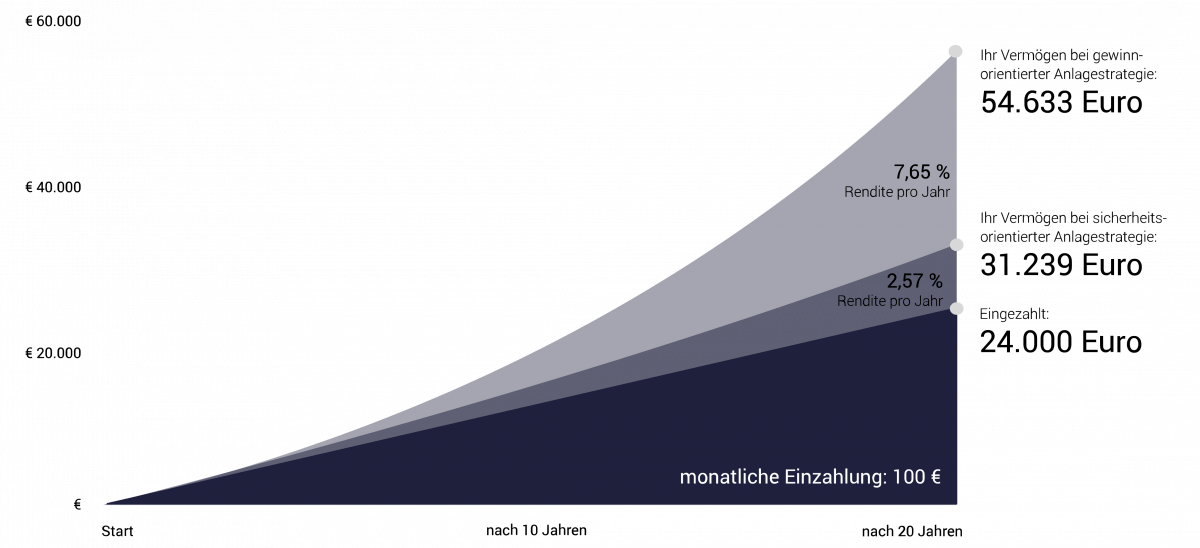
Make a fortune with the test winner
The growney concept has won over the trade press. In a test by 32 robo advisors, Wirtschaftswoche named growney the top robo advisor 2020 . Also Finanztip recommends growney with its favorable cost structure, the low minimum investment and the very good customer service as a robo-advisor. Customers are very satisfied on rating portals such as Ekomi. Here growney achieved a score of 4.5 out of 5 possible stars .
Investment Researcher: Tesla is possibly the most dangerous stock on Wall Street
For Tesla stock, there seemed to have been only one path in the past few months – steeply uphill. Since the beginning of the year, Tesla has more than quintupled its value on the stock exchange. Most recently, after the announcement and the implementation of the share split, there was a fireworks display. Only last week’s performance was disappointing. Profit-taking and a general slump in tech stocks drove down five percent. The right time to jump on the line of success now? An expert warns.
Trainer: Tesla shares are heavily overvalued
On CNBC’s Trading Nation program, investment researcher and New Constructs boss David Trainer said he believed Tesla stock was grossly overvalued. Even if the best-case scenario always occurs at Tesla in the coming years – for example in terms of the number of electric cars produced and sold, the profit margin or the conquest of new business areas – profits should still be significantly higher.
Tesla’s rating is currently 159 times higher than profits would allow, according to Trainer. Based on the share price, Tesla should have a market share of 40 to 110 percent, assuming the current average sales price of 57,000 US dollars. Tesla is currently one of the largest houses of cards that is ready to collapse, said coach, according to CNBC .
The recent stock split could prove to be an additional threat to potential investors. For trainers, the step of splitting Tesla shares into five parts is an attempt to get inexperienced stock traders to buy. It is clear that the entry barrier for buying paper with a share split – as Apple had carried out at the same time – is falling. Before the share split at the end of August, you had to pay more than $ 2,200 for a Tesla paper, after which it was $ 460. On Friday, Tesla shares traded at $ 418.
Tesla stock should cost more like $ 40 to $ 50
According to Trainer, a realistic valuation would place Tesla stock in the $ 40 to $ 50 range. According to the investment researcher, Tesla is not in the top 10 on the electric car market in Europe. The stricter laws in terms of CO2 emissions would have caused the traditional car manufacturers to catch up when it comes to pure electric and hybrid vehicles. In the US, similar requirements can be expected in the long term. Trainer paid tribute to Tesla and its CEO Elon Musk for their pioneering role in the electric car sector. But a look at the fundamental data ensures that he keeps his hands off the stock.

Your account at Qonto: business banking for entrepreneurs and the self-employed
Are you an entrepreneur and looking for a suitable business account? Qonto offers a banking service that is specifically tailored to the requirements of entrepreneurs – with high-quality design and the latest technology.
An entrepreneur has different rights to an account than a private person. Because in the business context it is no longer just a matter of appropriate account management fees, sufficient ATMs or being able to carry out your own transactions quickly and easily. If you need any account history then visit to accounting History blog.
Especially companies whose teams are growing quickly should rely on a business account that also gives new team members or freelancers access quickly – ideally with personalized limits and rights. And that’s not that easy to find.
The later Qonto founders Alex and Steve also had to experience this. For their first company together, they were looking for a business account in 2015 that met their requirements – to no avail. The business accounts that existed back then were all too complicated to use, too time-consuming and lacked modern financial management tools.
And so the two decided to revolutionize business banking for SMEs themselves and founded Qonto – a neo bank that offers entrepreneurs exactly what they need. At Qonto, it’s not your team that adapts to the account. But the account that adapts to your team.

The Qonto business account: it’s inside
With the Qonto business account , team expenses can be managed super easy, because every employee receives their own Qonto Mastercard. This can be done in a matter of minutes and can be completely personalized so that each employee has their own access, for which an individual limit can be set. All expenses such as expenses, transport, travel or marketing expenses can be managed independently – while an admin has a full overview of all expenses at all times and can adjust the set limits if necessary.
Employees can make transfers independently that only have to be approved by the admin – this simplifies workflows enormously. SEPA direct debits and collective transfers are also possible and also save time. You also benefit from the super-fast VIP customer support that you can reach at any time by email and phone. And all of this at fair and transparent prices.
The advantages of the premium business account from Qonto at a glance:
- Account opening in just ten minutes
- VIP customer support by mail and phone
- Virtual cards – ready for immediate use
- Clear overview of all expenses
- Personalized tags for a good financial structure
- Smart accounting functions such as unlimited sales history and separate account access for accountants
- Payment in foreign currencies
- German IBAN

Even more good reasons for Qonto:
Qonto is 100 percent digital and therefore much more sustainable (and faster) than a conventional bank with unnecessary bureaucracy and paperwork.
Qonto has its own core banking system and is therefore independent of the infrastructure of other banks – this also means 100 percent security for you as a customer.
Started in France, Qonto is now active in four countries, including Germany, Italy and Spain.
With QontoBoth physical and virtual payment cards can be created for all employees and are ready for immediate use. There is a large selection of payment cards. Whether Mastercard One, Plus or X (the first Business Metal Card in Europe, by the way): Each card adapts to the respective needs of its employee. You can set payment limits and your own PIN codes for locking and unlocking the cards. Everything is possible, from online payments with a 3D secure code to cash withdrawals at machines and other premium features. Every card is available in every tariff, also called plan at Qonto. As a self-employed person, for example, you can use the Solo Plan for nine euros a month and still apply for a Metal Card. Do you need an unlimited number of users for your many team members, choose the premium plan and receive up to five physical and an unlimited number of virtual Mastercards. Last but not least, every card comes with Mastercard insurance to protect you and other users.
Over 100,000 companies already use and love Qonto. This makes Qonto the fastest growing challenger bank in Europe. Do you want to be part of the movement? Then open your Qonto account now! New customers use the Premium Business Account for 30 days completely free of charge and without obligation.
A corporation is said to have fueled the tech share boom with $ 4 billion
Before the slump of the past two days, tech stocks in particular experienced an unprecedented boom . Tech companies such as Apple, Amazon, Facebook and Tesla have almost doubled their market value since spring. Apple, for example, became the first company in the world to reach a market value of two trillion dollars in August . According to coincident reports from the Wall Street Journal (WSJ) and the Financial Times , this price firework on the stock market could have been fueled by a single player.
Softbank: Boom triggered with call options?
According to the insiders quoted by the two renowned business newspapers, the Japanese Softbank group is said to have bought massive stock options on technology stocks in March, as the Handelsblatt reported. According to the WSJ, the purchase volume of the options is said to have amounted to four billion US dollars. Specifically, the whole thing is about so-called call options. These are options to buy shares at previously set – higher – prices. With put options, investors bet on falling share prices.
Because banks that offer call options have to have a correspondingly high number of the underlying shares in stock, these in turn drive the price further up. The options acquired by Softbank are said to have faced tech stocks valued at around $ 50 billion, according to the WSJ. In addition, Softbank is said to have spent another four billion dollars on shares in Amazon, Microsoft and Netflix, as well as a stake in Tesla. Softbank has not yet commented on this.
Big Five dominate US stock exchanges
The so-called Big Five, Apple, Microsoft, Amazon, Facebook and Google parent Alphabet, have pulled the overall market up with their massive price increases. After all, the five stocks make up almost a quarter of the S&P 500 index. Accordingly, market observers fear a general collapse in the stock markets if the tech stocks – as happened on Thursday and Friday – weaken.
Incidentally, Softbank is not likely to be the only player who has influenced the market with the strategy of call options. In the case of Salesforce, whose shares had shot up by 26 percent on the day the quarterly figures were announced, stock traders suspect such influence from an unknown investor. Incidentally, the Financial Times compares these investors with the so-called whales , who are said to own a large part of the existing Bitcoins and other cryptocurrencies. You can trigger large price fluctuations with purchases and sales.

Young professionals optimistic despite Corona
Accordingly, only ten percent of young professionals fear not to find a job in the next few years. However, many are apparently short of money: Only 16 percent are satisfied with their financial situation. That was the result of a representative survey of 1,043 young professionals by the opinion research institute Yougov. The client was the financial services provider Tecis in Hamburg.
At the same time, only a good third (34 percent) said that a high salary was important to them. A balanced ratio of work and leisure time (48 percent) and nice colleagues (47 percent) are therefore more important. In the survey, young people who are just about to complete their training or who have a maximum of two years of professional experience count as young professionals.
A majority sees the future in rosier colors than their current situation. Almost three quarters believe that they will be better off in terms of work, finances, living conditions and with regard to family and friends in five years. “Young people continue to rate their career opportunities positively – despite the recession, short-time work and unclear developments,” said Tecis board member Sönke Missfeldt. The company is part of the Swiss Life insurance group.
Framework data for the survey
The data is based on an online survey by YouGov in which 1,043 people took part between July 28th and August 14th, 2020. They were asked about their medium-term perspectives, their current life situation (job / career, finances, living and family / friends) as well as their current attitude to Corona. In future, this report will appear annually and show long-term developments in a barometer.
Among other things, the following questions were asked:
Which of the following aspects are particularly important to you in your professional life?
- high salary
- independent working
- Work-life balance (compatibility of work and private life)
- social commitment
- recognition
- flat hierarchies
- meaningful work
- Training opportunities
- Career opportunities
- something else, namely:
- nice colleague
- I do not know
- varied activities
What are you currently most concerned about?
- my financial situation
- Fear of not finding a job
- Fear of getting sick
- general uncertainty about the future
- Fear of not being able to cope with the course
- Losing family members or friends
- not having sufficient financial means in old age
- something else, namely:
- I’m currently not worried about anything
- don’t know (dpa / rw)
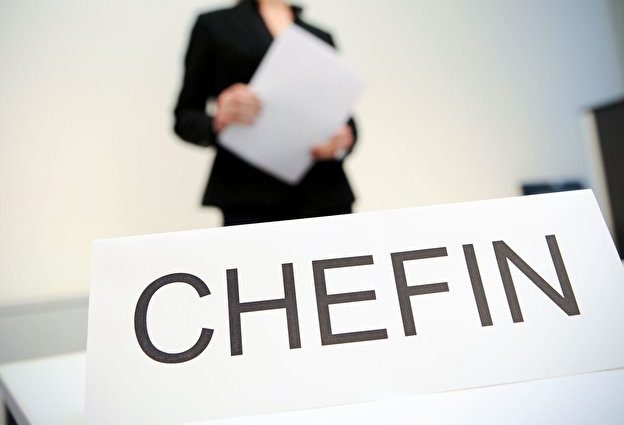
Slightly more women in management levels in public companies
The proportion of women in top jobs in large public companies has increased slightly. The organization “Women in the Supervisory Boards” (FidAR) determined this in a study.

Tesla factory building: first facade of production hall is up
Environmental approval for Tesla factory is pending
Critics worry about drinking water supplies
Objections will be discussed publicly on September 23
Tesla is looking for workers
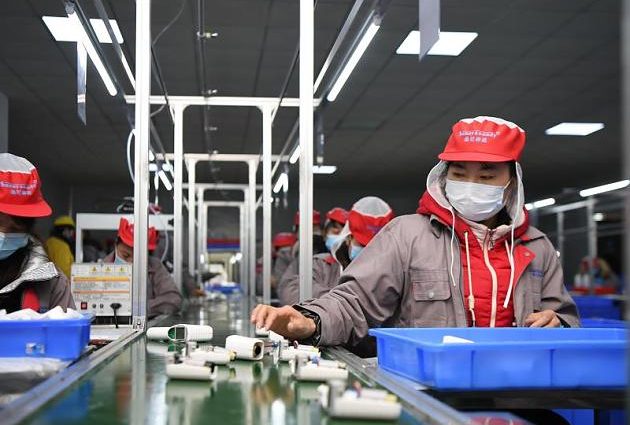
Investments: EU companies are demanding concessions from china
Brussels and Beijing have been negotiating fairer competition for six years. The tensions between China and the USA are bringing new momentum to the talks. But is a breakthrough realistic?
In the opinion of European companies, China must make a big leap to successfully conclude an investment agreement with the EU.
“The European side has made it very clear that China cannot hit in the middle,” said Jörg Wuttke, President of the EU Chamber of Commerce, with a view to the top talks between the EU and Beijing planned for the coming week.
According to Wuttke, fair competitive conditions already apply in Europe – for both domestic and Chinese companies. In China, however, this is still not the case. Therefore, it is up to Beijing to “close the gap.”
Chancellor Angela Merkel , EU Council President Charles Michel and Commission President Ursula von der Leyen want to join the talks next Monday via video conference with China’s President Xi Jinping. One of the topics will be the planned investment agreement, which has been negotiated for six years.
Indeed, against the background of increasing tensions with the USA, China had recently been optimistic that it would be able to initiate an agreement with the EU. Chamber President Wuttke, however, was not very confident that a really comprehensive deal that would satisfy EU companies could be made.
According to Wuttke, the time window for an agreement with China is also closing. There must be an agreement this year. Wuttke justified this with the fact that Beijing is countering more and more political headwinds not only in the USA, but also in EU countries – for example because of human rights violations. An agreement is becoming more and more difficult.
From the point of view of Wuttke, who presented his chamber’s annual position paper on Thursday, China itself would benefit from opening up further. The economic growth of the People’s Republic could experience a significant boost. The Chinese economy has so far lagged behind its potential.
Despite the numerous problems caused by the ongoing decoupling of the USA and China, according to Wuttke, it is not a realistic scenario to withdraw from China. After all, the most populous country contributes 30 percent to global growth.
European companies have benefited from the fact that China brought the corona pandemic under control earlier than other countries . The current momentum in the Chinese market is impressive. European carmakers and numerous luxury brands did good business again.
China’s successful fight against Corona also brings problems for European companies, said Wuttke. Due to ongoing entry restrictions, it is still difficult for companies to bring employees back to China . Business trips are hardly possible either.
EU companies struggled with problems in issuing visas. Travelers who come to China also have to go into quarantine for 14 days in a hotel room. Only then are they allowed to move freely.
Liability risks for companies are increasing
Whether the chemical company Bayer or Volkswagen – several German companies were or are confronted with expensive class actions in the USA. But that’s not the only liability risk for companies.
According to an analysis by Allianz, companies are confronted with increasing liability risks – particularly through class actions and recalls. In the USA in particular, the courts are awarding plaintiffs against companies with ever higher amounts of compensation. Accordingly, the average settlement sum of the 50 largest US court judgments from 2014 to 2018 has almost doubled from 28 to 54 million US dollars, write the liability experts of the Allianz industrial insurer AGCS in their study published on Wednesday.
A growing number of product recalls is particularly noticeable in Europe. Accordingly, there were 475 recalls in the EU in the auto industry alone in 2019, eleven percent more than in 2018 (428) – and the highest value in the past decade. According to the AGCS study, the increasing concentration in the industry is contributing to the increasing risks. The Japanese airbag manufacturer Tataka has achieved particular fame in this regard. According to AGCS, this supplied 19 car manufacturers. After reports of injuries and fatal accidents, an estimated 60 to 70 million cars were recalled from 2002 to 2015, according to the study.
Chances and dangers from Corona
According to AGCS, the corona pandemic could have two effects on product safety in the food industry – both positive and negative. On the one hand, higher hygiene standards could even reduce the risk of contamination. On the other hand, the uncertainties of the epidemic with new business processes, temporary closings, working from home, fewer official controls and irregularities in the supply chains could pose new threats to product safety, warn the insurer’s experts.
Allianz sees two very different phenomena as a further risk for companies: the protest movements around the globe and environmental regulations, including indoor air quality. In the latter respect, the pandemic could have direct effects, according to the study: the risk of legionella and mold growth was exacerbated by the temporary closure of commercial buildings, hotels, fitness studios and other facilities during the pandemic.